

It is expanding into insurance and education to rebuild valuation and put advanced treatments within reach for more people
[KUALA LUMPUR] Less than six months after its debut on the Nasdaq, Malaysia’s Alps Group is shifting its focus from research to execution, expanding into insurance and education as it seeks to close critical gaps in access to advanced medical technologies.
Alps’ push to build a full-stack ecosystem comes as it navigates the realities of being a newly listed biotech firm.
According to US Securities and Exchange Commission filings and Nasdaq data, Alps Group is in the early stages of commercialisation, reporting 12-month trailing revenue of around US$3.7 million and has yet to achieve profitability.
Once positioned as a Malaysian biotech unicorn, the company has seen its valuation come under pressure following its Nasdaq debut in October 2025, on the back of broader investor caution towards early-stage biotech firms.
This underscores a gap between its research-driven origins and commercial scale – a contrast to its debut, which carried an implied enterprise value of US$1.6 billion. Amid a broader market correction, its market capitalisation has fallen to roughly US$162 million.
For Dr Tham Seng Kong, the founder and group chief executive, the pullback was not unexpected.
“The market is very realistic – you must show results, not just talk,” he said, acknowledging that the company’s current share price does not yet reflect its long-term potential.
Dr Tham explained that the US listing was essential to access deeper capital pools and investors familiar with the capital-intensive nature of biotechnology – a sector that is still nascent in Malaysia.
However, a global listing also brings higher expectations for clear milestones and faster execution. To rebuild valuation, Dr Tham is focused on delivering measurable outcomes over the next 12 to 24 months.
Key priorities include rolling out a captive insurance model, establishing affiliated programmes in local universities, and advancing its Bio Valley campuses in Johor and Kuala Lumpur.
Tackling affordability issues

While medical breakthroughs are cheaper now than a decade ago, they remain inaccessible to most in South-east Asia.
For Alps, “the challenge is no longer about developing technology, but ensuring that it can be used by the mass market”, Dr Tham told The Business Times. “The problem is, most people cannot afford it.”
This also makes it difficult to commercialise biotechnology products.
For instance, the cost of whole genome sequencing declined from around US$20 million to US$25 million in 2006 to just US$24,810 by 2018, based on a report by Genetics in Medicine.
“Today, genome sequencing costs about RM10,000 (S$3,215), but it is still far out of reach for many people,” he said, noting that genome sequencing is a crucial way for early disease prevention, especially for cancer treatment.
Whole genome sequencing, which maps roughly three billion base pairs, can identify genetic mutations linked to diseases and enable earlier intervention.
Dr Tham’s focus on accessibility is rooted in decades of clinical experience. During his early years practising in China, he observed that most cancer patients were diagnosed at advanced stages, when treatment options are limited and survival rates are significantly lower.
“For early-stage cancer, the cure rate can exceed 90 to 95 per cent, but for advanced cancer, it can drop to around 5 per cent,” he said, emphasising that the lack of early detection remains a critical barrier to effective treatment.
Being a biotechnology research platform and healthcare service provider specialising in predictive, preventive and precision medicine, Alps is positioning itself as a biotechnology platform company – integrating research, clinical development, commercialisation and talent development within a single ecosystem.
Beyond being a biotech platform, the company’s operations span genomics, mRNA research and cellular therapies. Alps also generates revenue through its medical and wellness-services segment, which includes its medical centres and anti-ageing clinics.
Alps was recently named a finalist in BT’s Emerging Enterprise Awards 2025.
Filling the financing gap
A key pillar of the company’s strategy is a proposed captive insurance model aimed at covering advanced medical treatments that are typically excluded from conventional policies.
Advanced treatments, including gene therapies, stem cell applications and Chimeric antigen receptor (CAR) T-cell therapy, remain prohibitively expensive.
For instance, the total cost for CAR T-cell treatments can reach US$1 million in the US. In South-east Asia, costs remain high but varied: prices in Malaysia range between US$200,000 and US$400,000, while in Singapore, a single CAR-T cell infusion can cost about S$670,000, based on information from PlacidWay Medical Tourism and MediGence.
Conventional insurers, already grappling with rising medical inflation, have been reluctant to underwrite such high-cost and relatively new therapies.
“If a treatment exists but no one can afford it, then it has no meaning for humanity.”
Dr Tham Seng Kong, Alps Group founder and group CEO
“Advanced technology is not covered because the risk is too high and the pricing is uncertain… So we are trying to create a system that can support it,” said Dr Tham, acknowledging this will be a multi-year project to get partners who share the same vision.
Under the captive model, Alps intends to manage risk internally across its integrated value chain, from research to treatment, allowing it to better control costs and potentially extend coverage beyond hospitalisation to areas such as post-care, rehabilitation and regenerative therapies.
By spreading costs through premiums, Dr Tham believes that patients can gain access to treatment that would otherwise be unaffordable under conventional insurance frameworks.
“If a treatment exists but no one can afford it, then it has no meaning for humanity.”
The group CEO said the company is currently exploring partnerships with insurance players, although he acknowledged that structuring such a model would take time.
Building beyond technology
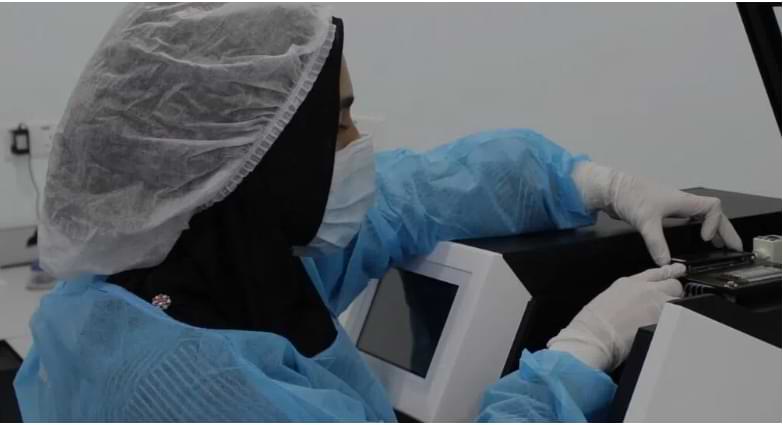
The company is also investing in education to address what it sees as another critical bottleneck – talent.
Malaysia’s biotechnology sector remains nascent, with limited pools of industry-ready scientists, said Dr Tham, adding that universities tend to focus on academic training, leaving a gap in commercially oriented expertise.
“We are not training academic scientists, we are training industry scientists,” he said.
The company plans to work with universities to establish affiliated programmes and train a pipeline of up to 1,000 students over time, combining scientific knowledge with business skills.
These initiatives form part of Alps’ broader plan to build an integrated biotechnology ecosystem – spanning research, clinical development and commercialisation.
Central to this is its Bio Valley concept – campuses designed to house upstream research, mid-stream clinical studies and downstream commercial activities.
The company is in talks with the authorities to establish sites in Johor and Kuala Lumpur.
In Johor, Alps is partnering with state-owned Johor Corp’s subsidiary JLand Group to build a Bio Valley campus. While Johor’s Sedenak has been proposed due to its emergence as a data centre hub, Alps is pushing for a more central location to attract talent.
The aim is to address a key gap in Malaysia’s biotech sector, where innovations often struggle to move beyond the research stage, said Dr Tham.
Source: business times